I spent some time last week with Pope Leo XIV's first encyclical, Magnifica Humanitas (~42,000 words), on safeguarding the human person in the age of AI.
A few colleagues came away disappointed. I think that's because they read it as a policy document, interpreting it through the positions they preferred on labor, regulation, taxes, and risk.
There's plenty there for that reading. Substantive sections on education (including a real defense of "productive struggle"), on protecting young people that would resonate with anyone following KOSA, and on work as a source not just of income but of dignity and purpose.
There's also an important discussion of mental health, broader social challenges, and loneliness. Relationships are a theme throughout: "Let us cultivate relationships! In an era that favors speed and fragmentation, the human person still yearns to receive care and recognition from attentive minds, kind words and hands capable of tenderness."
But I don't think the policy frame is the primary way to read this. The text wrestles with something deeper around the human condition.
The tell is how often Augustine appears in this encyclical. His book Confessions turns on a single line addressed to God, quoted in the encyclical: "our heart is restless until it rests in you." For Augustine, the soul moves toward what it loves. Love is a direction - the weight that pulls us toward what we believe will give us rest.
Augustine was about as accomplished as a person could be: a celebrated rhetorician with status and influence. His discovery was that none of it quieted his restlessness, because the restlessness was never a capability problem. The heart is aimed at something that "more" never satisfies - be it power, success, etc.
That, I think, is the deeper theme. The encyclical argues that human beings are fundamentally creatures of relationship, purpose, love, and ultimately (in this account) communion with God.
The dominant AI narrative is that capability is the answer: get smart enough, fast enough, productive enough, and we'll be better off. Augustine would ask a different question: are you sure that's what human beings are actually looking for? Because the things that make a life worth living -being known, being loved, having purpose - were never really capability problems.
No amount of intelligence resolves that longing, because the longing was never an intelligence problem. It was always a love problem. And a sufficiently powerful intelligence built on a disordered love doesn't quiet the restless heart. It scales it.
So the question is not "can we build powerful AI?" The question is: what kind of civilization are we building with it? For Leo, AI is simply the newest ground on which Augustine's two loves contend: the love of self that builds Babel, and the love of God that rebuilds Jerusalem.
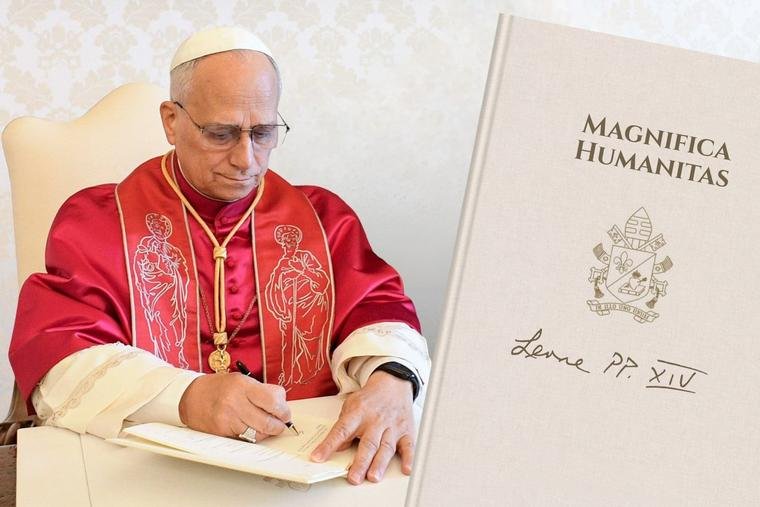
The Restless Heart Was Never an Intelligence Problem